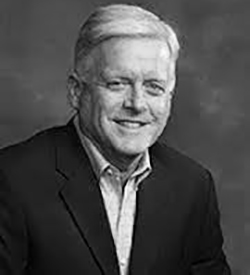
John Cyrier (SEER-ee-ay) served in the Texas House of Representatives for District 17. This district included Lee, Bastrop, Caldwell, Gonzales and Karnes Counties. As the former Chairman of the Texas Sunset Advisory Commission, he led the commission that reviews state agencies to make government more effective, efficient, and responsive to the needs of Texans. He previously chaired the House Committee on Culture, Recreation, and Tourism. This committee directly works with industries and activities that manage billions of dollars in economic impact annually to the State of Texas and the oversight committee for the Texas Parks and Wildlife Department.
John, was Founder and Managing Director of Sabre Commercial. Through his leadership, Sabre was consistently ranked in the Austin Business Journal’s top-10 “Best Places to Work” and “Fast 50” list of the fastest growing companies in Central Texas. Sabre was also a five-time winner of the Aggie 100 award, given to the 100 fastest growing Aggie-owned companies in the world. John has been nominated three times for the Austin Business Journal’s Best CEO award. By March of 2020, John sold his commercial construction firm that employed over seventy-five employees and operated out of two offices in central Texas.
Prior to his four terms representing the sprawling house district East of Austin, John was appointed and served as a Caldwell County Commissioner and County Judge Pro Tem. During his service he worked to improve transportation, overhaul outdated subdivision and development regulations, and promote local business development and jobs growth.
John is a 1995 graduate of Texas A&M University with a degree in Mechanical Engineering Technology and he served as Commander of the Fightin’ Texas Aggie Band. John remains an active member at the university and of his local A&M Club. As a leader in the Texas A&M Corps of Cadets, John was a member of the Ross Volunteers, Air Force ROTC, earned the Wofford Cain Boot and Sabre Award, Outstanding Major Unit Commander, and Outstanding Freshman A-Battery honors. John is also an Eagle Scout with a Bronze Palm.
John’s strong belief in service to his country and community has been a beacon throughout his life. John joined the Texas State Guard in 2016 and was promoted to the rank of Captain. He was a founding board member of the Lockhart ISD Education Foundation and has served on the board of directors for the Central Texas Food Bank and was board chair of Caritas of Austin, a nonprofit with over 80 staff members that works to end homelessness by fostering self-reliance and wellbeing. John’s service also includes leadership boards for the Real Estate Council of Austin, Capital Area Housing and Finance Corporation, Austin Area Research Organization, Greater San Marcos Partnership, and chair of the San Marcos Airport Advisory Commission. He is also past Chairman for the Austin Chapter of the Associated General Contractors of America.
John and his wife, Rachelle, live on their ranch just outside of Lockhart. John is an avid outdoorsman and a commercial, multi-engine, seaplane and instrument pilot with over 2,700 hours of flight time in mostly antique and WWII warbirds. John’s passion is aviation history and flying. He maintains his personal collection of aircraft at his ranch including his pride of over 18 years, a 1941 WWII Stearman biplane. John also enjoys adventure. That is why he is SCUBA certified, rides adventure motorcycles and holds a Skydiving A License with over 35 jumps.